Garbage bags & garbage bags

Sort
  • Selected
  • best -selling
  • Alphabetical, A-Z
  • Alphabetical, Z-A
  • Price, low after high
  • Price, high after low
  • Date, old too new
  • Date, new too old
1 Products found

best -selling
  • Selected
  • best -selling
  • Alphabetical, A-Z
  • Alphabetical, Z-A
  • Price, low after high
  • Price, high after low
  • Date, old too new
  • Date, new too old
Ein gerolltes Paket weißer Müllbeutel mit einem grün-weißen Etikett mit deutschem Text. Das Etikett hebt Eigenschaften wie „extrem reißfest“ (durchstoß- und reißfest) und „Easy Opener“ hervor. Dies ist der DEISS First Plus® Müllbeutel 18 Liter, hergestellt aus Premium-LDPE, mit den Maßen 460 x 520 mm, von EMIL DEISS KG (GmbH + Co.).
Garbage bags up to 69 liters

Deiss First Plus® garbage bag 18 liters, Premium-LDPE, 36020

SKU: DE-36020-18

£1.89 £1.89

VAT included. zzgl. Versand Net

ab
Regular price £1.89 GBP
Sales price £19.99

Deiss

Here you can see the top selection of our products related to the topic Deiss. Find suitable products for Garbage bags & garbage bags

Cleaning & Housekeeping

Here you can see the top selection of our products related to the topic Cleaning & Housekeeping. Find suitable products for Garbage bags & garbage bags.

Buy Garbage bags & garbage bags easily online - Altruan.de

In our modern society, the correct disposal of waste is not only a matter of cleanliness but also of environmental responsibility. We face the continuous challenge of using our resources effectively while preserving our planet for future generations. This begins with a fundamental understanding and appreciation of disposal practices.


Disposal Methods

There are various methods of waste disposal that vary depending on the type of waste. These include landfilling, composting, incineration, and recycling. Each method has its own advantages and is suitable depending on the specific environmental and health goals of the region. By choosing the right method for your needs, you make an active contribution to environmental protection.

  • Landfill: This is the most common form of waste disposal. The waste is taken to a landfill and deposited there.
  • Incineration: In this method, waste is burned, significantly reducing the volume of waste. This is a common method for disposing of hazardous waste.
  • Recycling: This involves collecting, sorting, and processing waste into new materials. This is a sustainable method of waste disposal as it reduces the use of natural resources.
  • Composting: Organic waste is broken down by microorganisms. The end product, compost, can be used as fertilizer in agriculture.
  • Hazardous Waste Disposal: Hazardous waste such as chemicals, solvents, or medical waste requires special disposal methods to ensure they do not harm the environment or human health.
  • E-Waste Disposal: Electronic waste or e-waste often contains hazardous materials and therefore requires special disposal procedures.

It is important to raise awareness of the proper disposal of waste to reduce environmental pollution and protect our natural resources.

Why Proper Disposal is Important

Proper disposal is important for various reasons:

  • Environmental Protection: Correct disposal of waste can reduce environmental pollution and preserve the natural beauty of our surroundings. Uncontrolled landfills can release harmful chemicals and gases that pollute the air, soil, and water.
  • Health and Safety: Improper disposal of waste can lead to health problems. For example, rotting food waste can spread pathogens, while sharp objects like broken glass or metal can cause injuries.
  • Resource management: Through recycling and other waste recovery methods, valuable materials can be reclaimed and reused. This reduces the need to extract new raw materials, which saves energy and promotes sustainability.
  • Legal requirements: In many countries, there are laws and regulations regarding waste disposal. By complying with these regulations, companies can avoid penalties and maintain their reputation as responsible corporate citizens.
  • Economic efficiency: An effective disposal strategy can help companies save costs. By minimizing waste production and maximizing waste recovery, they can reduce waste disposal costs and possibly even generate revenue from the sale of recyclable materials.

Waste Disposal

Waste disposal refers to the collection, transportation, processing, recycling, or disposal of waste materials. This can originate from human activity (e.g., household waste) as well as from industrial or commercial activities (e.g., production waste). Waste disposal is an important aspect of environmental protection as improperly disposed waste can cause significant environmental problems. It is important to dispose of waste correctly to protect the environment and maintain human health.


Household Disposal

Household disposal often differs from commercial procedures. It is essential that individuals understand the importance of separating recyclable and non-recyclable materials , as well as the correct disposal of hazardous waste such as electronic waste and batteries, to minimize environmental impact.


Disposal in Industrial Enterprises

It is important for industrial enterprises to dispose of their waste properly to minimize pollution and protect human health and safety. This can include the reuse or recycling of materials, incineration of waste for energy recovery, landfill disposal, or other waste treatment methods. The disposal of industrial waste is regulated by law in many countries to ensure it is conducted in a way that does not endanger the environment and public health. Companies can face heavy fines if they do not dispose of their waste properly. It is also important for industrial enterprises to minimize their waste production and use efficient production processes to reduce the amount of waste generated. This can be achieved by implementing waste prevention strategies, using environmentally friendly materials and technologies, and improving operational efficiency.


Disposing of Chemicals

The disposal of chemicals involves a series of processes to ensure that these substances are disposed of safely and in an environmentally friendly manner. This is particularly important as many chemicals can be hazardous if handled improperly.

  • Identification: The first step is to identify the chemicals that need to be disposed of. This can be done by checking labels and safety data sheets.
  • Sorting: Chemicals should be sorted according to their type. For example, acids and bases should be stored separately to avoid possible reactions.
  • Packing: Chemicals should be packed in secure containers specifically designed for their storage and disposal. They should be clearly labeled to identify which substances they contain.
  • Transport: Chemicals should be transported by specially trained personnel who know how to handle them safely.
  • Disposal: The final disposal of chemicals should take place in a licensed facility. This can be done by incineration, neutralization, or landfilling, for example.
  • Documentation: All steps of chemical disposal should be documented to ensure compliance with regulations and to avoid possible future problems.

It is important that these steps are carried out by trained personnel to ensure compliance with safety standards. It is also important to note that different countries and regions may have different regulations for chemical disposal. Therefore, it is important to know and follow local regulations and guidelines.


Disposal of Hazardous Materials

It is extremely important that hazardous materials are disposed of in accordance with legal regulations and standards to minimize the risk of contamination and health hazards. This can include collecting, sorting, transporting, treating, and finally disposing of or recycling the materials.

In Germany, the disposal of hazardous materials is strictly regulated. Companies must use special procedures and equipment and train their employees in the safe handling of these materials. Violations of these regulations can lead to significant penalties.


Legal Foundations of Disposal

The disposal of waste in Germany is regulated on various legal levels. Here are some of the most important legal foundations:

  • Circular Economy Act (KrWG): This law is the main legal basis for waste management in Germany. It regulates the prevention, recovery, and disposal of waste. The KrWG implements the EU Waste Framework Directive into German law and aims to increase resource efficiency by promoting the circular economy.
  • Federal Immission Control Act (BImSchG): This law regulates emissions that can occur during waste disposal. It contains regulations for controlling air pollution, noise, vibrations, light, heat, and radiation.
  • Waste Catalogue Ordinance (AVV): This ordinance classifies waste and specifies which waste is hazardous and requires special disposal.
  • Landfill Ordinance (DepV): This ordinance regulates the disposal of waste in landfills and long-term storage to protect the environment and human health.
  • Packaging Act (VerpackG): This law regulates the disposal of packaging waste and aims to reduce the amount of packaging waste and promote its recycling.
  • Electrical and Electronic Equipment Act (ElektroG): This law regulates the disposal of electrical and electronic equipment and aims to reduce the amount of this waste and promote its recycling.

Overall, these and other legal foundations aim to protect the environment and promote sustainable waste management.


Disposal and Recycling Solutions

By offering comprehensive disposal and recycling solutions, we actively contribute to environmental protection. Through tailored solutions for households and businesses, we promote sustainable practices that contribute to resource conservation and the overall well-being of our planet.

Discover our high-quality trash bags for every requirement!

With us, you will find a wide selection of trash bags with various capacities to meet your needs. Whether for daily use in the kitchen, in the office, or for larger cleanup tasks – we have the right bags for you.

Our trash bags are made from robust material that is tear-resistant and impermeable, ensuring that your trash is stored safely and hygienically . Thanks to their sturdy construction, they are ideal for all types of waste, whether kitchen waste, paper waste, or even garden waste.

We offer trash bags in various sizes and strengths so you can find exactly what you need. From small bags for the bathroom trash can to extra-large bags for use in the garden or during renovation work – we have everything covered.

Our trash bags are not only practical but also environmentally friendly. Many of our products are made from recycled material and are biodegradable, allowing you to protect the environment while disposing of your trash.

Say goodbye to leaky, tearing trash bags and invest in quality and reliability. Discover our selection of trash bags today and make waste disposal easier!

Whether biodegradable bags, heavy-duty bags, hygiene bags, or recycling bags - you will find the right solution for your needs with us.

Biodegradable bags for environmentally friendly disposal

Our organic waste bags are specially designed for the disposal of organic waste. They are biodegradable and compostable, allowing you to contribute to environmental protection. Available in various sizes and capacities to meet your needs.

Heavy Duty Bags for robust applications

For the transport and disposal of heavy waste, we offer heavy duty bags. These are particularly tear-resistant and durable to meet even the most demanding requirements. Available in various sizes and strengths for the safe disposal of heavy waste.

Hygiene Bags for the safe handling of infectious waste

Our hygiene bags are ideal for use in medical facilities, laboratories, or nursing homes where infectious or contaminated waste needs to be disposed of. They are made from high-quality materials and offer a reliable and safe disposal option for this special waste.

Recycling Bags for efficient waste separation

With our recycling bags, you can efficiently separate and recycle waste. They are available with various prints or colors to allow clear labeling and sorting. Choose from a variety of sizes and capacities to meet your needs.

Environmentally friendly options with the Blue Angel

Many of our waste bags and sacks carry the environmental label "Blue Angel", which stands for environmentally friendly products. This guarantees you that the products have been produced in an environmentally friendly manner and meet strict criteria regarding their environmental compatibility.

-

Discover our selection of waste bags and sacks now and find the right solution for your disposal needs. From organic waste bags to heavy duty bags, hygiene bags, and recycling bags - we have everything you need.
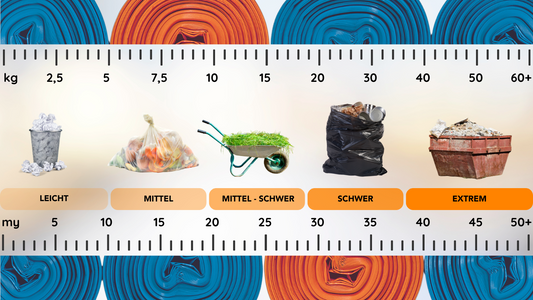
Garbage Bags by Strength & Size

Suitable garbage bags for every need and application

Up to 20 liters (bathroom, etc.)

up to 69 liters (household waste, organic waste, etc.)

from 70 liters (catering waste, etc.)

from 120 liters (industry, facilities, etc.)

Heavy-duty or contamination


Common questions & answers

Here you will find the most frequently asked questions and our answers about the products Garbage bags & garbage bags.

What are typical types of trash bags and trash bags?

When should trash bags and trash bags be used?

Where can garbage bags and garbage bags be used?

Why is the use of trash bags and trash bags important?