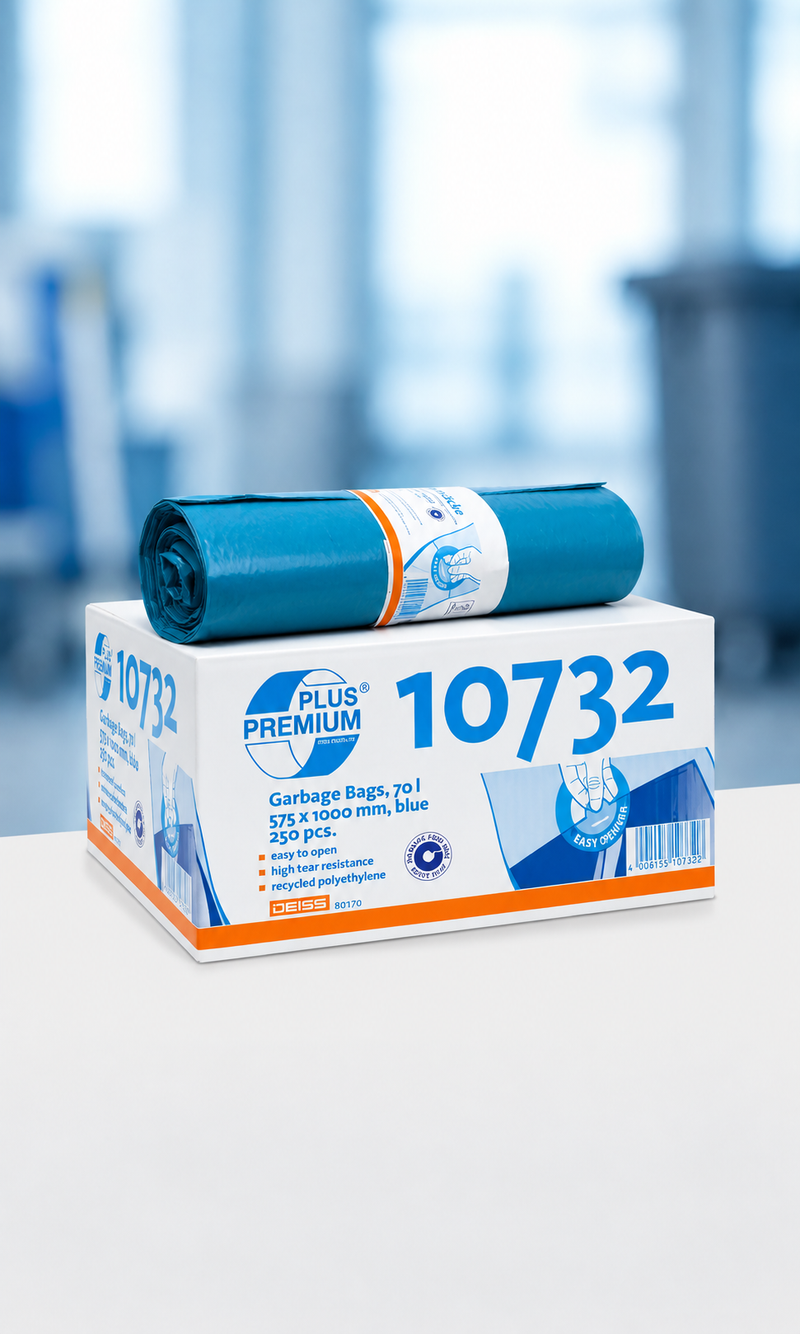
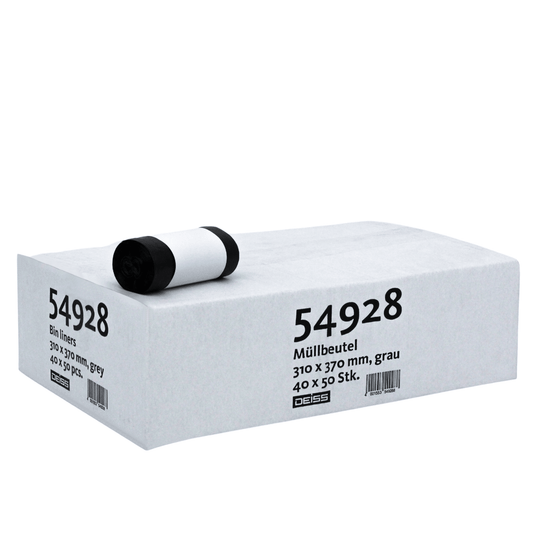
Trash Bags & Liners for Streamlined Waste Disposal
Trash bags & liners are essential consumables for hygienic and organized waste collection in professional settings. They are used in care facilities, medical practices, hospitals, the food service industry, building cleaning, manufacturing, government offices, and private households, among other places. The right design is crucial: volume, material thickness, tear resistance, and intended use determine whether a trash bag is suitable for light waste, wet contents, or particularly heavy loads.
In everyday work, trash bags and trash sacks support clear processes for waste separation, transport, and disposal. Smaller trash bags are suitable for wastebaskets, restrooms, or kitchen waste, while larger trash sacks are used in cleaning carts, commercial kitchens, workshops, storage areas, or outdoor spaces.
Selecting trash bags suited to the application
The requirements for trash bags vary significantly depending on the work environment. In offices, treatment rooms, or restroom areas, clean handling and appropriately sized trash bags are a priority. For smaller waste bins, for example, the DEISS 500x600 mm HDPE 30-liter trash bag can be a suitable solution for light waste and compact collection points.
In the food service, healthcare, and cleaning industries, thicker, more durable designs are often required, as these settings may also generate wet or mixed waste. Thinner trash bags are often sufficient for light paper and packaging waste. For heavier contents, sharp edges, or larger quantities, tear-resistant trash bags or heavy-duty bags are more appropriate.
<
h2 class="p1">
What Really Matters When Choosing Trash Bags The right choice depends on more than just capacity. Material, thickness, shape, and durability also determine whether trash bags and liners will perform reliably in everyday use.
Important selection criteria include:
- Volume: Small trash bags up to 20 liters are suitable for wastebaskets, restroom bins, or smaller waste collectors. Trash bags starting at 70 liters and those starting at 120 liters are suitable for larger containers, cleaning areas, or commercial waste volumes.
- Material thickness: Thinner bags are sufficient for light waste. For heavy, wet, or sharp-edged contents, you should look for greater material thickness and tear resistance.
- Tear resistance: Sturdy trash bags are particularly important in cleaning, industry, warehousing, and the food service industry. For larger volumes of waste , the Altruan 120-liter trash bag, Type 60, 12060 Basic, blue, can be a suitable option for standardized waste disposal processes.
- Leak-proofness: For wet waste, kitchen waste, or hygiene areas, the highest possible level of leak-proofness is crucial.
- Fit: The trash bag should fit the container so that it sits securely, does not slip, and can be closed properly after filling.
- Color and waste separation: Different colors can help clearly separate waste types within the facility and make internal waste disposal processes more organized.
The more precisely trash bags are tailored to the container, waste type, and work area, the easier it is to implement disposal processes in everyday operations.
Differences between trash bags, trash sacks, and specialty versions
Garbage bags and large-capacity waste bags differ primarily in size, load capacity, and intended use. While garbage bags are typically used for smaller waste containers, large-capacity waste bags are designed for larger volumes and heavier use.
Garbage bags up to 20 liters are suitable for small waste bins in offices, restrooms, treatment rooms, or kitchens. They are practical when waste is emptied regularly and does not accumulate heavy loads.
Garbage bags starting at 70 liters are frequently used in cleaning areas, common rooms, the food service industry, and commercial settings. They offer greater capacity and are suitable for larger volumes of waste during ongoing operations.
Garbage bags starting at 120 liters are ideal for high-volume waste, such as in warehouses, industrial settings, workshops, building maintenance, or outdoor areas. For heavy-duty use, tear-resistant materials should be prioritized.
Heavy-duty bags are designed for more demanding waste, such as heavier loads, sharp-edged materials, or frequent transport. They provide additional stability and reduce the risk of tearing during handling.
Organic trash bags support the collection of organic Waste, for example in kitchens, break rooms, or the food service industry. It is always important to check which local disposal regulations apply.
Paper trash bags can be an alternative for certain types of dry waste and are particularly suitable in situations where the use of plastic needs to be reduced or where separate collection by type is encouraged.
Key Features for Professional Use
In professional settings, trash bags must not only fit into the containers but also integrate into daily routines. For high-traffic areas, the DEISS Premium Plus extremely tear-resistant heavy-duty trash bag 10002, 120 liters, can be a practical choice when waste is heavier, has sharp edges, or needs to be transported more frequently.
Key features include:
- secure insertion and removal during regular changes
- sufficient load capacity for the expected waste weight
- the right size for trash cans, waste bins, and collection containers
- clean handling of wet or mixed waste
- Clear waste separation through appropriate colors or material types
- Space-saving storage through roll stock or compact packaging units
Especially with high consumption, it’s worth stocking a variety of sizes and qualities so that the right option is available for every area.
Practical classification by application
In medical practices, clinics, and care facilities, trash bags are primarily needed for treatment rooms, restroom areas, common rooms, and general waste. Here, hygienic handling, appropriate container sizes, and regular replacement are particularly important.
In building cleaning, durable trash bags are required that can be changed quickly, transported safely, and used in cleaning carts or collection bins. For larger volumes of waste, trash bags starting at 70 liters or 120 liters are particularly relevant.
In the food service and institutional catering sectors, various types of waste are generated, including packaging, kitchen waste, and organic scraps. Depending on the area, compostable trash bags, larger trash bags, or extra-thick versions may be appropriate.
In industrial, workshop, and warehouse settings, durability and tear resistance are more critical. For high-volume waste, the Altruan 120-liter Type 70, 12070 Premium, blue trash bag can be a suitable choice when more stability is required than standard bags provide.
In offices, administrative settings, and public facilities, smaller trash bags are often sufficient for wastebaskets and general waste. Larger trash bags are required for collection points, break rooms, or central disposal areas.
Everyday Use and Handling
Garbage bags should be selected so that they completely line the container and hold securely at the edges. Bags that are too small slip easily, while bags that are too large can sit awkwardly and waste material unnecessarily. When filling the bag, be sure to observe the maximum weight limit, especially when handling wet or heavy waste.
Regular replacement is important for maintaining hygiene. Damp, odorous, or organic waste should not be left in the container for longer than necessary. Storing the rolls in a dry and clean place protects them from damage and ensures that the bags remain reliably available for daily use.
Related subcategories and complementary products
For structured waste disposal, trash bags and trash sacks can be selected based on volume, material, and intended use. A combination of multiple sizes is particularly helpful so that different areas of the facility can be equipped according to their needs.
Useful subcategories and additions include:
A well-coordinated selection simplifies daily waste collection, reduces mistakes regarding size and material thickness, and supports clear disposal procedures in professional work environments.


 Vendor:Altruan
 Vendor:Altruan
 Vendor:EMIL DEISS KG (GmbH + Co.)
 Vendor:EMIL DEISS KG (GmbH + Co.)
 Vendor:EMIL DEISS KG (GmbH + Co.)
 Vendor:EMIL DEISS KG (GmbH + Co.)
 Vendor:EMIL DEISS KG (GmbH + Co.)
 Vendor:EMIL DEISS KG (GmbH + Co.)
 Vendor:EMIL DEISS KG (GmbH + Co.)
 Vendor:EMIL DEISS KG (GmbH + Co.)
 Vendor:EMIL DEISS KG (GmbH + Co.)
 Vendor:EMIL DEISS KG (GmbH + Co.)
 Vendor:EMIL DEISS KG (GmbH + Co.)
 Vendor:EMIL DEISS KG (GmbH + Co.)
 Vendor:EMIL DEISS KG (GmbH + Co.)