Wound care

846 products

  • A tube and a box of Schülke octenisept® Wound Gel by Schülke & Mayr GmbH, in white packaging with blue and pink lettering, feature German information on moisture protection for acute wounds and minor injuries. Package (1 item).
    Up to 1% off
    Vendor:
    Schülke & Mayr GmbH

    Schülke Octenisept® wound gel | Pack (1 piece)

    6 total reviews

    Regular price £4.23 GBP
    Sale price £4.23 GBP Regular price £4.27 GBP
    Unit price £2.12  per  10ml
  • A white tube of the Seni Care Wound Protection Cream with Arginine – 200 ml by TZMO Germany offers effective protection for sensitive skin. The vegan, fragrance-free formula supports the skin's regeneration process, making it ideal for skin care.
    Vendor:
    TZMO Deutschland GmbH

    Seni Care wound protection cream with arginine - 200 ml | Pack (1 piece)

    5 total reviews

    Regular price £3.30 GBP
    Sale price £3.30 GBP Regular price £3.30 GBP
    Unit price £1.65  per  100ml
  • One box of Meditrade BeeSana® sterile non-woven compresses, 4-ply, non-woven, dimensions 5x5 cm, containing 25 packs of 2 sterile compresses each, from Meditrade GmbH
    Up to 35% off
    Vendor:
    Meditrade GmbH

    Meditrade Beesana® fleece compress sterile

    2 total reviews

    Regular price From £0.89 GBP
    Sale price From £0.89 GBP Regular price £0.89 GBP
  • Four rolls of Holthaus VliVet® self-adhesive bandages for veterinary use, manufactured by Holthaus Medical GmbH & Co. KG, are lined up side by side. From left to right, the colors are blue, black, green, and red. The bandages have a textured surface and a cylindrical shape with a white inner core, making them ideal for hoof care in veterinary settings.
    Up to 1% off
    Vendor:
    Holthaus Medical GmbH & Co. KG

    Holthaus Vlivet® self -adhering bandage for veterinary sector

    3 total reviews

    Regular price From £1.11 GBP
    Sale price From £1.11 GBP Regular price £1.12 GBP
  • The B. Braun Softa® Swabs Alcohol Swabs Pack (100 pieces) by B. Braun Deutschland GmbH & Co. KG offers individually packaged swabs for skin cleansing. The green-and-white packaging features multilingual text, making it perfect for use with isopropyl alcohol swabs.
    Vendor:
    B. Braun Deutschland GmbH & Co. KG

    B. Braun Softa® SWABS alcohol swab | Pack (100 pieces)

    2 total reviews

    Regular price £2.66 GBP
    Sale price £2.66 GBP Regular price £2.66 GBP
  • A box of Paul Hartmann AG Hartmann Peha-haft Color elastic support bandages, blue, featuring a design of a smiling woman and a child on the front.
    Up to 35% off
    Vendor:
    Paul Hartmann AG

    Hartmann Peha-Hold Color Elastic Fixing Association, Blue

    3 total reviews

    Regular price From £1.33 GBP
    Sale price From £1.33 GBP Regular price £1.78 GBP
    Unit price £0.45  per  m
  • Image of a box of Holthaus Medical GmbH & Co. KG Holthaus Ypsisept® Alcohol Swabs, 60 x 60 mm, 100 pieces | Package (1 piece). The box features the text “100 alcohol swabs for skin cleansing” and “60 x 60 mm.” Behind the box are several individual packets of isopropyl alcohol swabs.
    Up to 9% off
    Vendor:
    Holthaus Medical GmbH & Co. KG

    HOLTHAUS YPSISEPT® alcohol swab 60 x 60 mm, 100 pieces | Pack (1 piece)

    2 total reviews

    Regular price £1.78 GBP
    Sale price £1.78 GBP Regular price £1.95 GBP
  • a roll of cotton swabs, non-sterile swabs
    Vendor:
    Meditrade GmbH

    Meditrade Beesana cellar dip, 4 x 5 cm, 2 rolls of 500 pieces | Pack (2 rolls)

    4 total reviews

    Regular price £2.87 GBP
    Sale price £2.87 GBP Regular price £2.87 GBP
  • Fingerless gloves
    Up to 36% off
    Vendor:
    Meditrade GmbH

    Meditrade latex fingerlings - 100 pieces

    5 total reviews

    Regular price From £0.91 GBP
    Sale price From £0.91 GBP Regular price £1.39 GBP
  • The image shows a non-sterile Meditrade BeeSana® non-woven gauze pad package containing 100 non-sterile, four-ply pads measuring 10 x 10 cm. Meditrade GmbH describes them as ideal for wound care. Several gauze pads are elegantly displayed outside the package to highlight their effectiveness.
    Vendor:
    Meditrade GmbH

    Meditrade Beesana® Vlies compress Unsteril 4 times 10 x 10 cm | Pack (100 pieces)

    6 total reviews

    Only 6 left
    Regular price £1.36 GBP
    Sale price £1.36 GBP Regular price £1.36 GBP
  • Wound dressing
    Vendor:
    Paul Hartmann AG

    Hartmann Cosmopor® sterile wound association 7.2 x 5 cm

    3 total reviews

    Only 23 left
    Regular price From £0.94 GBP
    Sale price From £0.94 GBP Regular price £0.94 GBP
  • A wheel of traditional white goat cheese, wrapped in a blue-and-white bandage bearing the brand name Meditrade ABE®, isolated against a white background. The exposed end of the cheese reveals its creamy texture.
    Up to 4% off
    Vendor:
    Meditrade GmbH

    Meditrade ABE® upholstered bandage

    1 total reviews

    Regular price From £0.79 GBP
    Sale price From £0.79 GBP Regular price £0.82 GBP
    Unit price £0.26  per  m
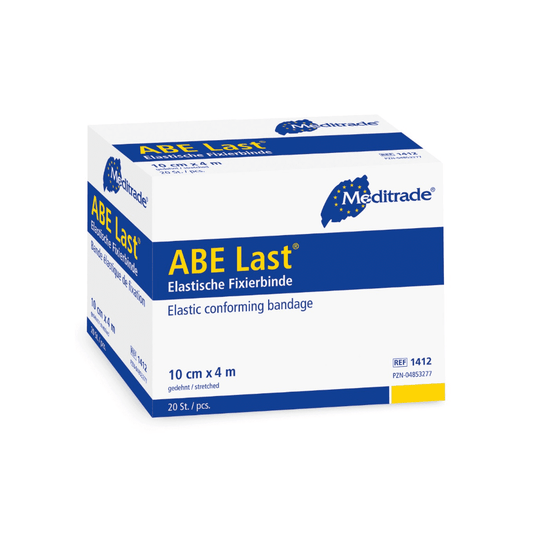
  • elastic support bandage
    Up to 12% off
    Vendor:
    Meditrade GmbH

    Meditrade ABE® LAST Elastic fixing bandage - different sizes

    5 total reviews

    Regular price From £1.77 GBP
    Sale price From £1.77 GBP Regular price £2.00 GBP
    Unit price £0.44  per  m
  • MaiMed-VK non-sterile fleece compresses of 100 pieces/paper bag
    Vendor:
    MaiMed GmbH

    MaiMed-VK non-sterile fleece compresses of 100 pieces/paper bag

    1 total reviews

    Regular price From £0.60 GBP
    Sale price From £0.60 GBP Regular price £0.60 GBP
  • Image of a box of Meditrade ABE® adhesive non-woven fabric, ideal for securing dressings. The white box with blue and yellow accents contains 10 cm x 10 m of adhesive non-woven fabric, suitable for sensitive skin. Reference number: 4471, PZN: 06168686.
    Vendor:
    Meditrade GmbH

    Meditrade ABE® fixing fleece, self -adhesive

    3 total reviews

    Only 7 left
    Regular price From £2.15 GBP
    Sale price From £2.15 GBP Regular price £2.15 GBP
Wound Care for Professional Settings

Wound care encompasses products required for the treatment, coverage, and management of wounds in everyday professional practice. These include, among other things, compresses, bandages, wound dressings, fixation materials, and supplementary wound care supplies for first aid, nursing, medical practices, and healthcare facilities. A suitable selection supports structured procedures, hygienic work practices, and needs-based care for various types of wounds.

Especially in professional settings, wound care supplies must be readily available, stored in an organized manner, and selected appropriately for the specific application. Whether it’s a minor cut, postoperative care, a dressing change, or a first-aid situation: it is crucial that the material, size, and design are suitable for the respective application.


Classifying wound care by application

The requirements for wound care materials vary significantly depending on the work environment. In doctors’ offices and nursing facilities, the focus is often on regular dressing changes, hygienic coverage, and reliable fixation. In businesses, schools, government offices, or the food service industry, on the other hand, the focus is often on providing quick first aid for minor injuries.

The type of wound also influences the selection. For superficial injuries, adhesive bandages or simple dressing materials are often sufficient. For wounds with heavy exudate, sensitive skin, or larger wound areas, absorbent compresses, appropriate wound dressings, and suitable fixation solutions become more important.


What really matters when selecting wound care materials

Wound care should not be selected based solely on product type. What matters most is the role the material plays in the care process. Compresses, bandages, and wound dressings differ significantly in absorbency, size, adhesion, padding, and comfort of use.

Important selection criteria include:

  • Wound size and type: Small cuts or abrasions require different materials than larger or more exudative wound areas.
  • Absorbency: Gauze pads and absorbent wound dressings help absorb wound exudate and cover the wound.
  • Sterility: Sterile products are important for many medical applications, especially when there is direct contact with the wound.
  • Adhesion and fixation: Adhesive bandages, fixation bandages, or adhesive dressings should fit securely without placing unnecessary strain on the skin.
  • Skin compatibility: Choosing the right material is especially important when changing dressings frequently or for sensitive skin.
  • Handling: In nursing, medical practice, and first aid, materials that are readily available and easy to use are essential.

For basic care, for example, sterile non-woven compresses such as the BeeSana® Non-Woven Compresses, Non-Sterile – 100 Count are suitable when absorbent dressing material is needed for general applications. When selecting products, however, one should always consider whether a sterile or non-sterile version is required for the specific application.


Differences in wound care explained clearly

Wound Care includes products used directly for cleaning, disinfecting, or treating a wound. These may include wound disinfectants, compresses, and other materials that support the first step in proper wound care.

First aid refers to materials that must be readily available in the event of acute injuries. These include bandages, compresses, dressings, and supplementary products for first aid in the workplace, in facilities, or on the go.

Wound dressings are used to cover and protect wounds and to securely hold dressing materials in place. Depending on the design, a dressing can be absorbent, cushioning, adhesive, or particularly flexible

.Compresses are frequently used to cover wounds, clean them, or absorb wound exudate. They are available in various sizes, layers, and designs. The key factors here are absorbency, size, number of layers, and whether a sterile or non-sterile version is required.

Band-Aids are particularly practical for minor injuries and spot wound coverage. They can be applied quickly and are available in various sizes, materials, and designs.


Important characteristics for professional use

In daily practice, wound care must be reliable, hygienic, and well-organized. The following are particularly important:

  • Quick access: Wound care supplies should be clearly sorted and stored within easy reach.
  • Appropriate sizes: Different wound areas require different product dimensions.
  • Secure coverage: Wounds should be protected from external influences.
  • Convenient packaging: Individually packaged items ensure hygienic removal.
  • Predictable restocking: Supplies should be replenished in a timely manner, especially in high-traffic areas.

Especially with regularly used dressing materials, a well-organized selection can help simplify processes in nursing, medical practices, and first aid. For applications requiring sterile compresses, for example, Hartmann ES Compresses in various sizes, 8-ply, sterile, are suitable.


Distinguishing Between Sterile and Non-Sterile Products

In wound care, distinguishing between sterile and non-sterile products is particularly important. Sterile compresses and wound dressings are individually or protectedly packaged and are frequently used when the material comes into direct contact with the wound. Depending on the application, non-sterile products may be suitable for supplementary tasks, padding, or general care steps.

Specific suitability always depends on the product in question, the application, and the applicable guidelines in the work area. Product information regarding sterility, size, material, and packaging should therefore be carefully considered.


Selecting Wound Care Based on the Setting

In doctors’ offices and outpatient clinics, Sterile compresses, bandages, fixation materials, and wound care products are frequently needed. Clear procedures, hygienic dispensing, and appropriate sizes for various treatments are essential.

In care facilities, the focus is often on regular care. Here, absorbent compresses, skin-friendly fixation materials, and consumables that are easy to store are particularly important. For flexible dressing solutions, the Meditrade ABE® Last® adhesive fixation bandage can be used, for example, when dressing materials need to be held securely in place.

In businesses and administrative settings, first aid plays a central role. Bandages, dressing materials, and compresses should be quickly accessible and suitable for typical everyday injuries.

In the food service industry, kitchens, and food-handling areas, well-adhering bandages and readily available first-aid products are important, as minor cuts can occur during daily work

. In laboratories, industry, and logistics, robust, readily accessible, and clearly organized wound care supplies are essential. Depending on the activity, bandages, dressings, and first-aid supplies can be effectively combined for initial treatment.


Use and Handling in Daily Life

Wound care supplies should be stored in a clean, dry, and protected area. Sterile products must remain in undamaged packaging until use. When changing dressings, clear preparation is helpful so that all necessary materials are ready and interruptions are avoided.

Regularly checking first-aid supplies is also important. Used or damaged products should be replaced promptly so that wound care supplies remain fully available when needed. For minor injuries in everyday work, bandages like the Hansaplast Classic Bandage can be a practical addition.


Suitable products and supplements for wound care

For well-coordinated wound care, various product groups can be effectively combined:

A well-coordinated selection from these areas supports clear workflows, hygienic practices, and a reliable supply chain in everyday medical practice.

What counts as modern wound care?

Modern wound care includes products such as wound dressings, dressings, compresses, fixation materials and additional aids. They serve to protect the wound, promote healing and prevent infections.

Which products are suitable for treating acute and chronic wounds?

Classic wound dressings and bandages are often used for acute wounds, while special products for moist wound care are used for chronic wounds. The selection depends on the type of wound, degree of exudation and healing phase.

Who are wound care products suitable for?

Products from the wound care sector are suitable for hospitals, doctor's offices, nursing facilities, outpatient care services and other medical specialist users. They support safe and professional care for patients.

What should you pay attention to when choosing wound care products?

When selecting wound care products, factors such as material compatibility, absorbency, sterility and area of ​​application are crucial. In addition, the products should comply with applicable medical standards and be used correctly.