
-

 Vendor:Schülke & Mayr GmbH
Schülke Octenisept® wound gel | Pack (1 piece)
Regular price £4.58 GBPSale price £4.58 GBP Regular priceUnit price £2.29 per 10ml£4.58 GBP -
 Vendor:Beiersdorf AG
Hansaplast wound healing ointment - 20 g | Tube (20 g)
Regular price £3.14 GBPSale price £3.14 GBP Regular priceUnit price £157.00 per kg£3.14 GBP -
 Vendor:B. Braun Deutschland GmbH & Co. KG
B. Braun Prontosan® acute wound gel - 30 | Tube (30 g)
Low stockRegular price £12.23 GBPSale price £12.23 GBP Regular priceUnit price £407.67 per kg£12.23 GBP -
 Vendor:Schülke & Mayr GmbH
Schülke Octenilin® wound gel - 20 ml | Pack (20 ml)
Low stockRegular price £11.24 GBPSale price £11.24 GBP Regular priceUnit price £562.00 per l£11.24 GBP -
 Vendor:Paul Hartmann AG
Hartmann Hydrosorb Gel Hydrogel Wound Dressing 15 g | Pack (10 pieces)
Regular price £92.58 GBPSale price £92.58 GBP Regular priceUnit price per£92.58 GBP


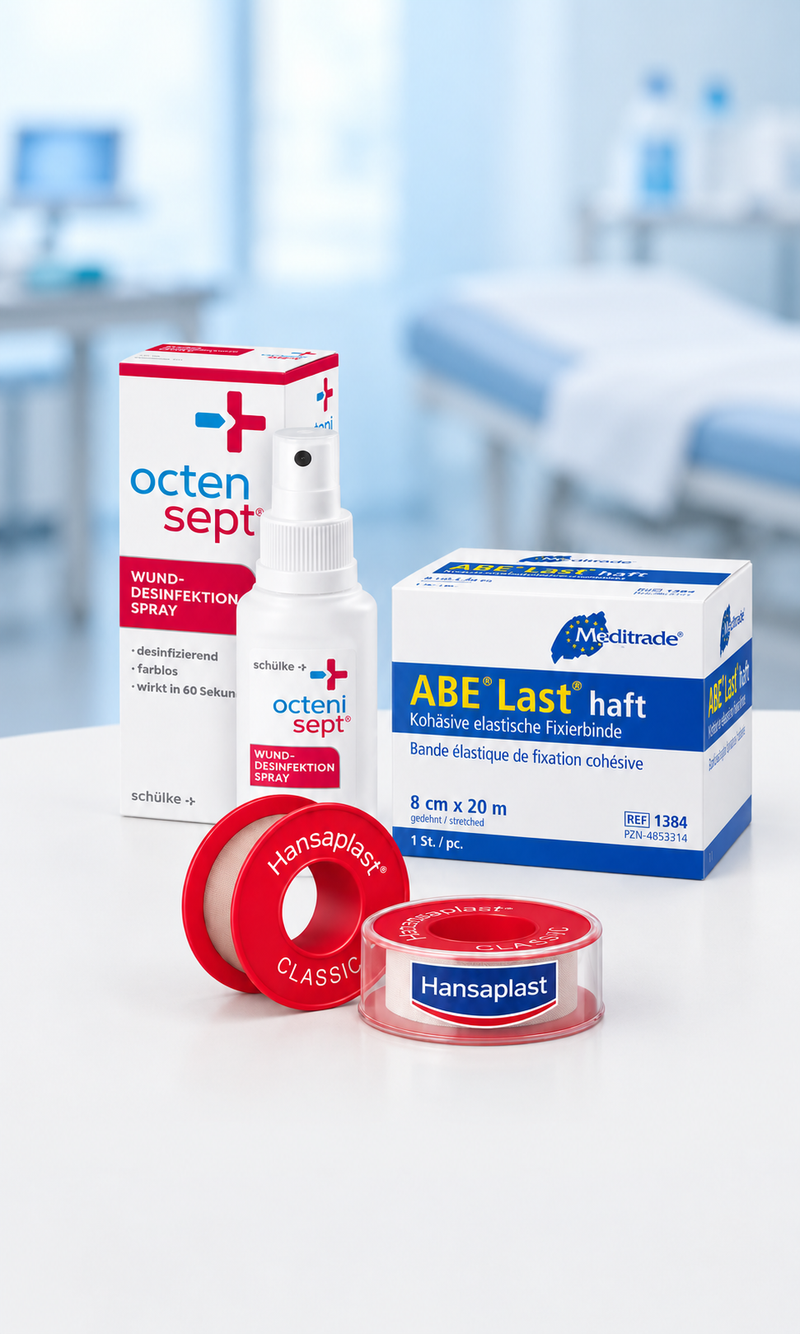


Wound Irrigation as the First Step in Structured Wound Care
Wound irrigation forms the foundation of proper wound care. It serves to remove mechanical contaminants, foreign bodies, residual exudate, and microorganisms from the wound site. When performed properly, wound irrigation reduces the bacterial load and creates a controlled environment for subsequent care. Particularly in cases of acute injuries, chronic wounds, or postoperative wound sites, preparatory cleansing is an essential component of standardized wound care procedures.
In doctors’ offices, hospitals, long-term care facilities, and outpatient settings, wound irrigation is a routine procedure. The goal is to clean the wound as gently as possible without causing additional trauma to the tissue. The irrigation solution is applied evenly to loosen and remove loose debris. A structured wound irrigation process aids in assessing the condition of the wound and facilitates decisions regarding further therapeutic steps.
By combining hygienic cleansing with targeted preparation of the wound surface, wound irrigation lays the foundation for the use of modern wound gels and dressings.
Properties and Mechanism of Action of Wound Treatment Gels
A wound treatment gel is used after cleansing to promote a moist and physiologically favorable wound environment as part of wound care. A balanced moisture level supports cell migration, promotes granulation, and can reduce the risk of scab formation or drying out. Wound treatment gels are used in particular for dry, encrusted, or slow-healing wounds.
Typical characteristics of wound treatment gel include:
- Promotion of a stable, moist wound environment
- Good tissue compatibility
- Even distribution across the wound surface
- Can be used in combination with various wound dressings
In practice, for example, B. Braun Prontosan Acute Wound Gel is used, which is suitable for cleansing and moisturizing. Schülke octenisept Wound Gel is also used when an additional germ-reducing component is desired. For dry or fibrin-covered wounds, Hartmann Hydrosorb Gel Sterile can be used, which provides moisture and helps loosen wound debris.
The selection of the appropriate wound treatment gel is always based on the specific indication. Factors such as the stage of the wound, the amount of exudate, and the surrounding skin should be taken into account to ensure care tailored to the patient’s needs.
Use of Sterile Wound Gel in Sensitive Care Settings
Sterile wound gel is manufactured under controlled conditions and is intended for direct contact with open wounds. Its sterility is particularly important for wounds at risk of infection or surgical wounds. Before application, the wound should be carefully cleaned and assessed to rule out any contraindications.
Sterile wound gel should be applied evenly over the entire wound surface. Overapplication should be avoided to prevent the wound edges from becoming softened. The wound is then covered with a suitable sterile wound dressing.
Aseptic technique must be maintained during wound care. Opened tubes or containers should be stored according to the manufacturer’s instructions and used within the recommended time frames. Sterile wound gel is generally intended for single-use on a single patient to prevent cross-contamination.
The proper use of sterile wound gel supports safe and structured wound care, which promotes physiological healing processes and reduces the risk of secondary complications.
Complementary Care Approaches with Medical Wound Gel
Medical wound gel is an integral part of a holistic wound management approach. It combines cleansing, moisture regulation, and protection of the wound surface within a structured care regimen. The focus is not on the individual product, but rather on tailoring all components to the specific condition of the wound.
When combined with other product groups, a reliable and transparent care regimen is established. Medical wound gel is frequently used in conjunction with sterile wound dressings, compresses, and fixation systems. This coordinated approach supports controlled wound healing and facilitates regular dressing changes.
Recommended complementary categories:
A well-organized selection of medical wound gels promotes hygiene standards, supports documentable treatment procedures, and provides a solid foundation for professional wound care in various healthcare settings.


