
-

 Vendor:Hartmann
Hartmann Grassolind® ointment dressing, various sizes
Features: Fleece
Unit price: £0.59£0.49 / pieceRegular price From £5.88 GBP From £4.90 GBPSale price From £5.88 GBP From £4.90 GBP Regular priceUnit price £0.00 per£5.88 GBP £4.90 GBPplus shipping
-

 Vendor:BSN Medical
Cuticell Classic, paraffin-impregnated ointment pad, sterile
Features: Fleece
Low stockUnit price: £1.02£0.85 / pieceRegular price From £5.10 GBP From £4.25 GBPSale price From £5.10 GBP From £4.25 GBP Regular priceUnit price £0.00 per£5.10 GBP £4.25 GBPplus shipping
-

 Vendor:Hartmann
Hartmann Atrauman® sterile ointment dressing
Features: Fleece
Unit price: £1.38£1.15 / pieceRegular price From £13.81 GBP From £11.51 GBPSale price From £13.81 GBP From £11.51 GBP Regular priceUnit price £0.00 per£13.81 GBP £11.51 GBPplus shipping
Size: 5 x 5 cm, 7.5 x 10 cm (sold out)
-
 Vendor:Hartmann
Hartmann Grassolind ointment dressing, sterile, 20 x 20 cm | Pack (10 pieces)
Low stockUnit price: £2.45£2.04 / pieceRegular price £24.50 GBP £20.42 GBPSale price £24.50 GBP £20.42 GBP Regular priceUnit price £0.00 per£24.50 GBP £20.42 GBPplus shipping
-
 Vendor:Hartmann
Hartmann Atrauman ointment dressing
Regular price From £32.15 GBP From £26.79 GBPSale price From £32.15 GBP From £26.79 GBP Regular priceUnit price £0.00 per£32.15 GBP £26.79 GBPplus shipping




Ointment dressings for atraumatic wound care
Ointment dressings are wound dressings impregnated with an ointment or paraffin that are applied directly to the wound and are designed to prevent the dressing from sticking to the wound bed. They are a type of dressing and are used in doctors’ offices, hospitals, and outpatient care for the management of acute and chronic wounds, such as abrasions, lacerations, burns, or skin grafts.
Depending on the model, ointment compresses differ in their backing material, impregnation, and intended use. This allows for the selection of an appropriate compress based on the type of wound and the amount of exudate.
Features and Benefits of Ointment Dressings
Ointment dressings consist of a breathable, exudate-permeable fabric impregnated with a neutral ointment or soft paraffin. The base material and impregnation vary by model, making the dressings suitable for different types of wounds.
Typical characteristics of ointment dressings:
- non-adhesive wound-contact layer to protect the wound bed
- Impregnated with a neutral ointment or soft paraffin, depending on the model
- air- and secretion-permeable fabric
- Depending on the model, free of active ingredients and therefore also suitable for patients with sensitive skin
- Sterile and individually packaged
- Available in various sizes
Which of these characteristics apply in each individual case depends heavily on the specific model. For general wound care, a neutral ointment compress is often sufficient, whereas a paraffin compress may be more appropriate for wounds with heavier exudate.
Which ointment dressings are suitable for which applications?
The Hartmann Grassolind® ointment dressing is suitable for general wound care of large abrasions, lacerations, and burns. According to the product information, it consists of a loosely woven cotton fabric impregnated with a neutral, active-ingredient-free ointment that is designed to keep the wound edges supple.
The Hartmann Atrauman® sterile ointment compress is suitable for the atraumatic treatment of superficial acute and chronic wounds. According to the product information, it is designed as a non-adhesive wound contact layer intended to prevent the secondary dressing from sticking to the wound bed, and, according to the manufacturer, is also suitable for patients with sensitive skin.
The Cuticell® Classic ointment dressing with paraffin is suitable for the care of exuding wounds such as first- and second-degree burns or leg ulcers. According to the product information, it consists of loosely woven cotton gauze impregnated with soft paraffin and is also available in a long 10 x 40 cm version for larger wound areas.
What should you look for when buying ointment dressings?
A key selection criterion is the type of wound. For drier wounds and general wound care, a neutral, ointment-impregnated dressing is usually sufficient, whereas for more exudative wounds, a paraffin dressing with adequate absorbency in the secondary dressing may be more appropriate.
Size also plays a role. Smaller dressings are suitable for limited wound areas, while larger sizes or strip formats are needed for more extensive wounds such as burns or split-thickness skin graft sites.
Since ointment compresses are usually combined with an absorbent secondary dressing made from the compresses themselves to serve as a wound contact layer, it’s also worth considering a suitable fixation material to ensure the compress remains securely in place on the wound.
Neutral ointment compress, atraumatic wound contact layer, or paraffin compress—which ointment compress is right for you?
Neutral compresses impregnated with ointment are designed for general wound care and are primarily intended to keep the wound edges and surrounding skin supple.
Atraumatic wound contact layers serve a similar but more specific purpose: They are specifically designed to prevent the secondary dressing from adhering to the wound bed, making them particularly suitable for sensitive or chronic wounds.
Paraffin compresses, on the other hand, are intended for exuding wounds, where they help maintain a moist wound environment and facilitate atraumatic dressing changes. Which type is appropriate therefore depends on the specific wound and its level of exudate—no single type is inherently better suited than another.
Application and Instructions for Ointment Compresses
Before application, the wound should be cleaned in accordance with applicable hygiene guidelines and, if indicated, disinfected. The ointment compress is then removed from its sterile packaging and placed directly on the wound before an absorbent secondary dressing is applied over it.
Ointment dressings are intended for single use and are not reused after application. According to the manufacturer’s instructions, the frequency of dressing changes depends on the type of wound and the amount of exudate and is determined by the treating healthcare professional.
For storage and disposal, the respective manufacturer’s instructions generally apply, as well as—in a medical setting—the facility’s internal hygiene guidelines.
Complementary Products for Ointment Compresses
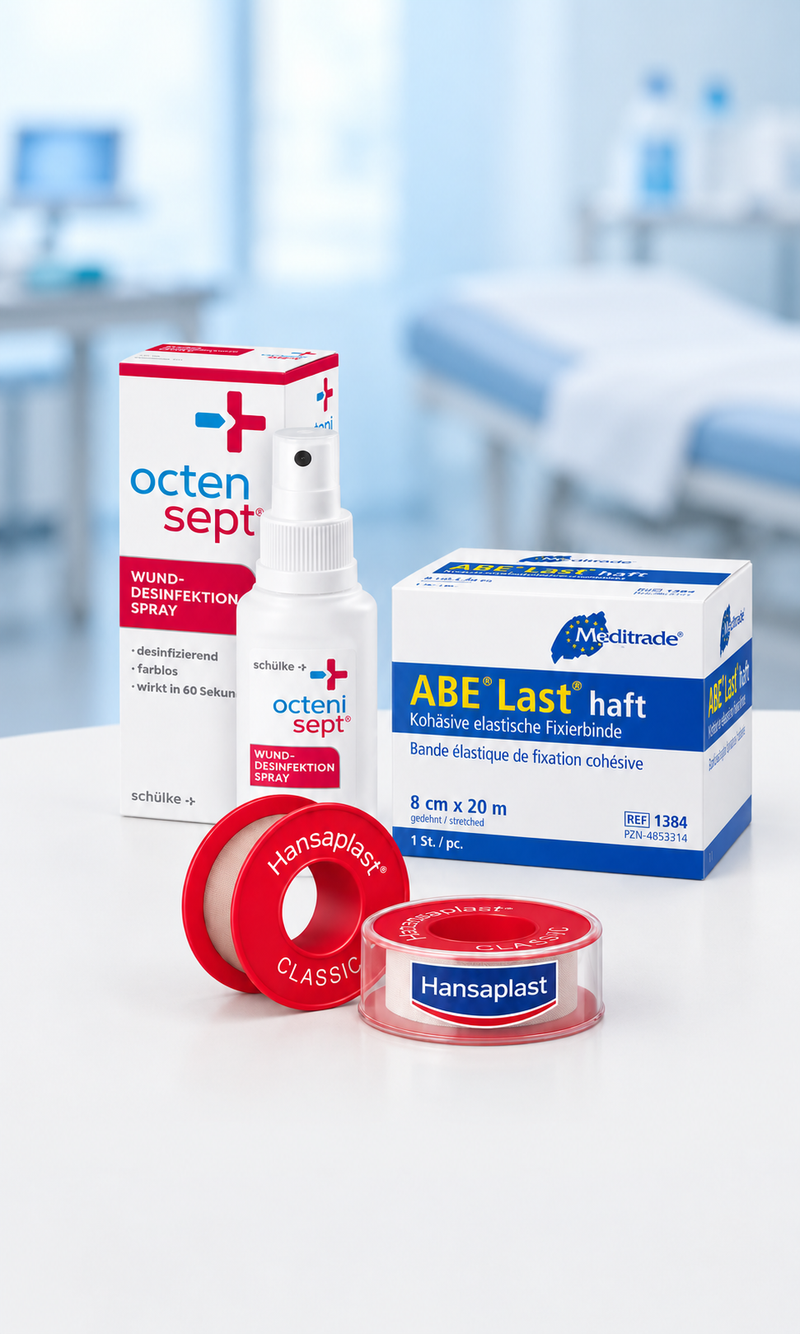
Wound disinfectant complements ointment compresses for cleaning the wound before a dressing change. Wound dressings provide the appropriate, absorbent secondary dressing that is applied over the ointment compress, while adhesive tape securely holds the dressing in place on the skin. Together with other compresses, this allows you to assemble a complete set of supplies for the entire dressing change.


